
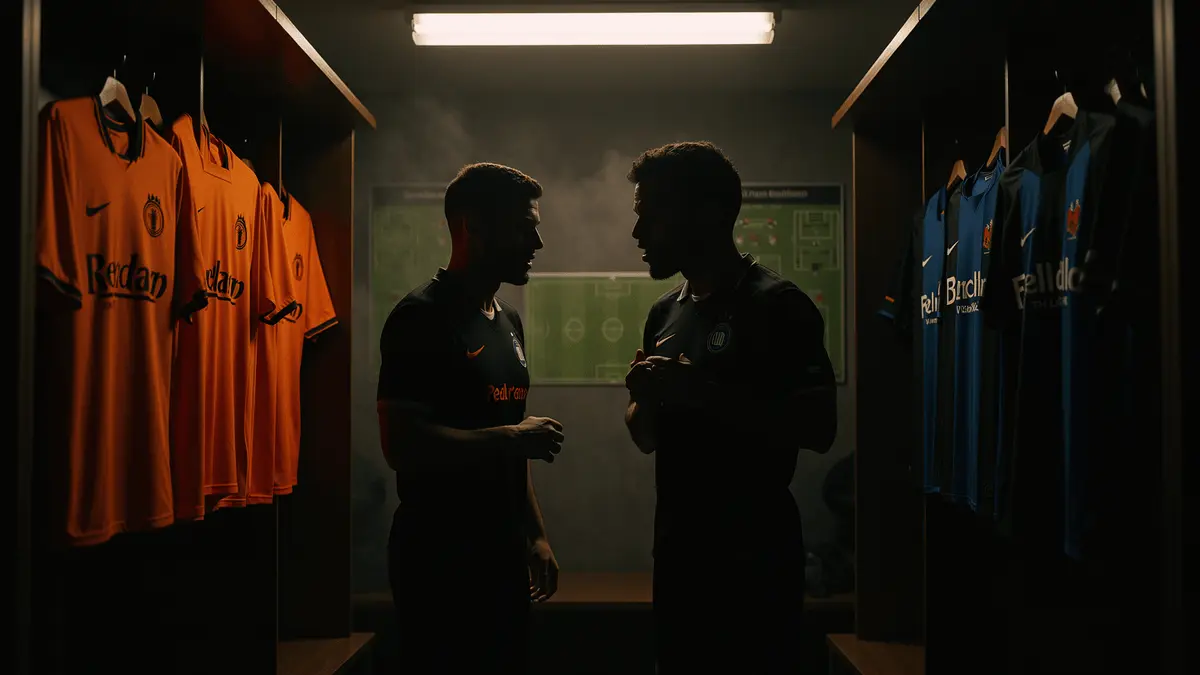
Manager Denzel Dumfries has called on the Dutch national team to embrace the direct and confrontational culture of Inter’s dressing room, insisting that a comfortable group dynamic risks limiting what Koeman’s side can achieve at the World Cup.
Ahead of the Netherlands’ World Cup campaign, the outgoing Nerazzurri right-back drew a sharp contrast between the two environments he is best known for, revealing which standards he believes the Oranje should strive for.
“We need to demand more from each other. That’s the lesson we learned from the last European Championship. As a group, we can tell each other the truth more often and more openly. And I’m going to do that, because I’m a responsible person in that sense. It’s important to ignite a little bit of a fire within the team.”
This observation is not a casual remark from a player walking out the door. Dumfries spent four years in one of Serie A’s toughest group environments, winning domestic trophies, reaching the Champions League final and working with the likes of Lautaro Martínez, Nicolo Barella and Hakan Çalhanoglu. These individuals are consistently described by Italian media as vocal and strict promoters of internal standards.
Intel culture in action
“We sometimes clash a lot with each other there, but there are so many strong personalities and firm opinions that we are practically forced to assert ourselves. The Dutch national team has a lot of spontaneity and positivity, and we have a very fun group, but we can also shake each other up a little bit more from time to time. We’re always looking to improve.”
That’s the keyword. It means being forced to assert yourself. Dumfries does not describe a toxic environment – he has called Intel before “Families are made up of special people, all of whom are willing to sacrifice themselves for others.” Importantly, conflict and unity coexist at the Nerazzurri, as common tactical demands from the staff create a common reference point for internal discussions. At Inter under Chivu, the concept is clear and non-negotiable. That means players can discuss implementation without the conflict threatening the regime.
According to Dumfries’ own account, the Dutch system leans more toward harmony than friction. This is not a criticism of Koeman’s management, but it does identify an upper limit. A fun group stays fun. Competitive groups thrive under pressure.
There are existing pillars that Dumfries can work around. He has previously highlighted Virgil van Dijk’s authority in the Dutch dressing room, describing him as the cornerstone of the group as both a presence and a standard setter. The call for greater peer-to-peer accountability is therefore not a call to build something from scratch, but rather an attempt to deepen what is already there.
Dumfries also sent a more optimistic signal about the Dutch tactical development. “More and more players are realizing that the first ball must be played well with the right foot. This is a positive development.” For a team that has historically oscillated between growing creativity and structural weakness, such collective buy-in to fundamental principles is important and suggests that the communication gap he identified is closing, if not already closed.
The timing of these comments makes them even more important. Dumfries’ move to Real Madrid is currently at an advanced stage, meaning this is one of his final acts as a Nerazzurri player, and he is using this platform to set standards for the national team he continues to represent after leaving the club that gave him standards. The message to his Dutch teammates is clear. Having fun is not enough. He’s going to say it out loud in the dressing room.
