
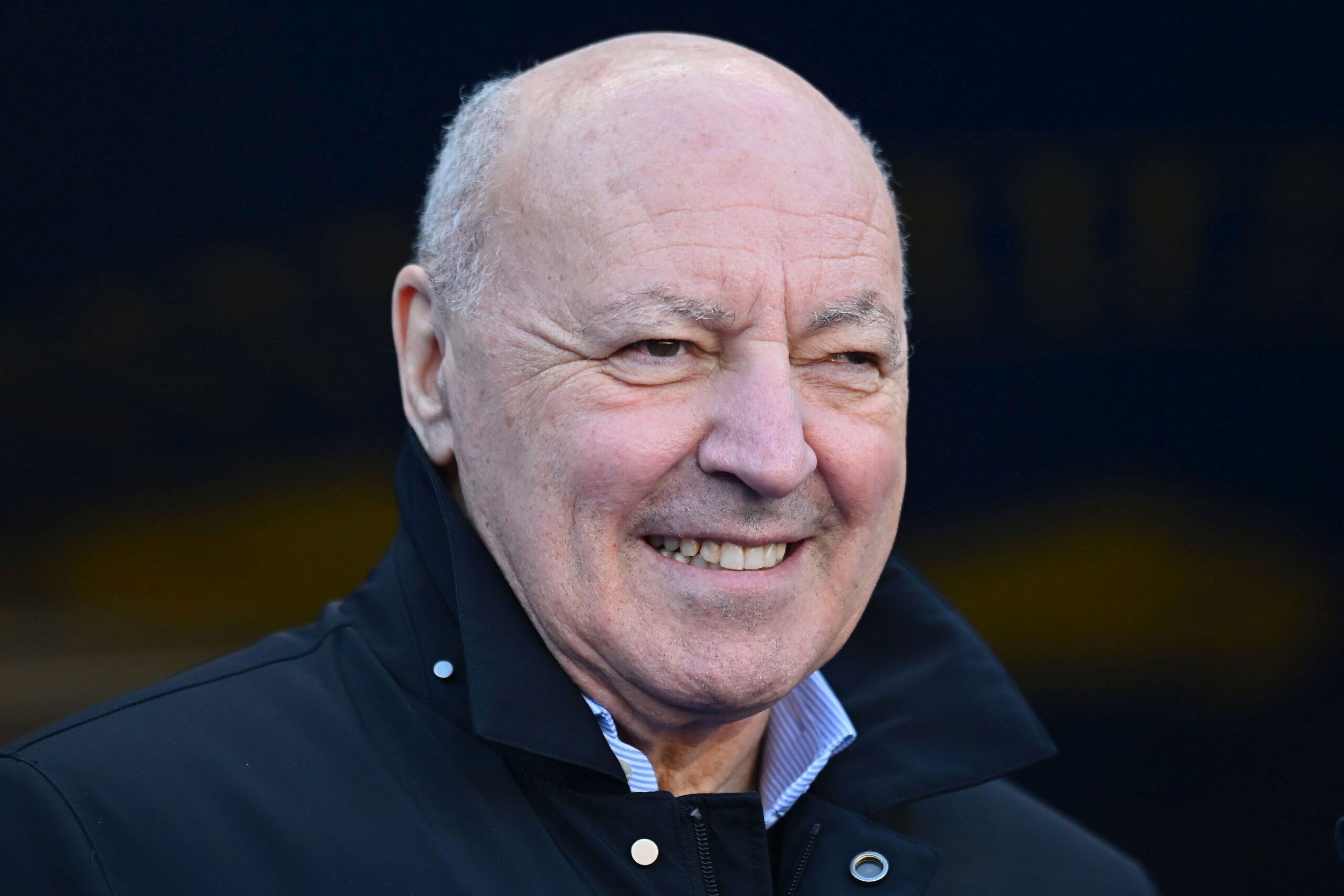
In just seven months, Juventus have become the most expensive revolving door in Italian football, while Inter are quietly demonstrating what financial discipline really looks like.
The contrast couldn’t be more vivid. This is a living case study in how football clubs evolve and fall apart.
Let’s start with a number that should worry any Juventus shareholder. Thiago Motta was sacked in March 2025, just eight months into his role.
His successor, Igor Tudor, could not have been more fortunate. He was in office for just seven months before being dismissed in October 2025.
Both coaches have contracts until 2027. This means that Juventus are spending a total of around 25 million euros on salaries for two coaches who are not coaching them.
The club are currently courting Luciano Spalletti to become their third manager in less than a year, with Roberto Mancini reportedly on standby.
This could mean three different coaching staffs on the payroll at the same time. This is a costly signal indicating a change in strategy rather than direction.
This is not to say that ambition is wrong. Governance is under stress.
Inter Milan vs Juventus – Oaktree revolution vs the €25 million coaching merry-go-round
Carousels are just a symptom of a deeper structural problem. Juventus will post a pre-tax loss of 196 million euros for the 2023/24 season, widening the deficit for the seventh year in a row.
Over the past five seasons, the club has run a deficit of nearly 900 million euros, which has been repeatedly covered by capital increases from exhausted shareholders.
What is even more worrying is that Juventus recorded losses of 322.9 million euros in the 2022-23 and 2023-24 seasons alone, breaching the UEFA settlement agreement that capped losses at 60 million euros.
This is not a short-term setback. This is a strategic failure to adapt to a new football economy that values sustainability over spending.
Beyond the Italian financial Alps, Inter tells a different story.
There were understandable concerns when Oaktree Capital took over in May 2024 after Suning defaulted on a €395 million loan.
Will another foreign fund prioritize margin over meaning?
Instead, Oaktree brought what Italian soccer had needed for a long time: modern financial discipline combined with sporting ambition.
Under its management, Inter posted record revenues of €567 million and net profit of €35.4 million in the 2024/25 financial year, a sharp recovery from a loss of €35.7 million the previous year.
The club also refinanced its bonds, lowering interest rates from 6.75% to 4.5%, saving millions of dollars annually.
It’s nothing fancy, but it’s basic. This is what competent ownership looks like in the 21st century.
unpleasant truth

Differences also extend to the technical realm. Juventus have changed two high-profile managers in seven months, but Inter have chosen to stay on.
Simone Inzaghi is a builder, not a celebrity coach. His steady leadership has enabled Inter to rise to the top of Italian football without any drama or instability.
Juventus often act out of urgency. Inter acts in ways that were not designed. Some clubs chase results. The other is to build a system to generate them.
This is an unpleasant reality for Juventus supporters. Inter are doing what Juventus used to do best: combining structure, stability and long-term vision.
Juventus are still being run like a pre-FFP club, with losses likely to be made up by ownership and liability waiting until another season.
The problem is that soccer has changed, but Juventus hasn’t changed with it.
Meanwhile, Intel’s model under Oaktree shows that sustainability and success are not mutually exclusive. they are intertwined.
verdict
Juventus fans may scoff at Inter’s “corporate” approach or glorify the freer days of yore, but modern football doesn’t reward nostalgia. It rewards strategy.
The boldest move may not be a management reshuffle. But it is building institutional coherence.
Sometimes the wisest investment is not in the transfer market, but in culture, structure and stability.
Oaktree isn’t perfect, either, and Inter’s pragmatism could frustrate fans desperate to sign big players.
But when one club makes a profit of 35 million euros while another loses 196 million euros by paying several coaches to stay home, the contrast becomes obvious.
Numbers don’t lie. A club is building for the future. Another person is still trying to buy.
Posted by: Andrea Zanon
Andrea Zanon is the co-founder of Confidente. He is an international advisor who has worked for financial institutions and entrepreneurs on sustainability, international affairs and development.
